
Most designers still think “great design” means great aesthetics and usability.
But the truth? The best designers I’ve met don’t obsess on those, but on problems.
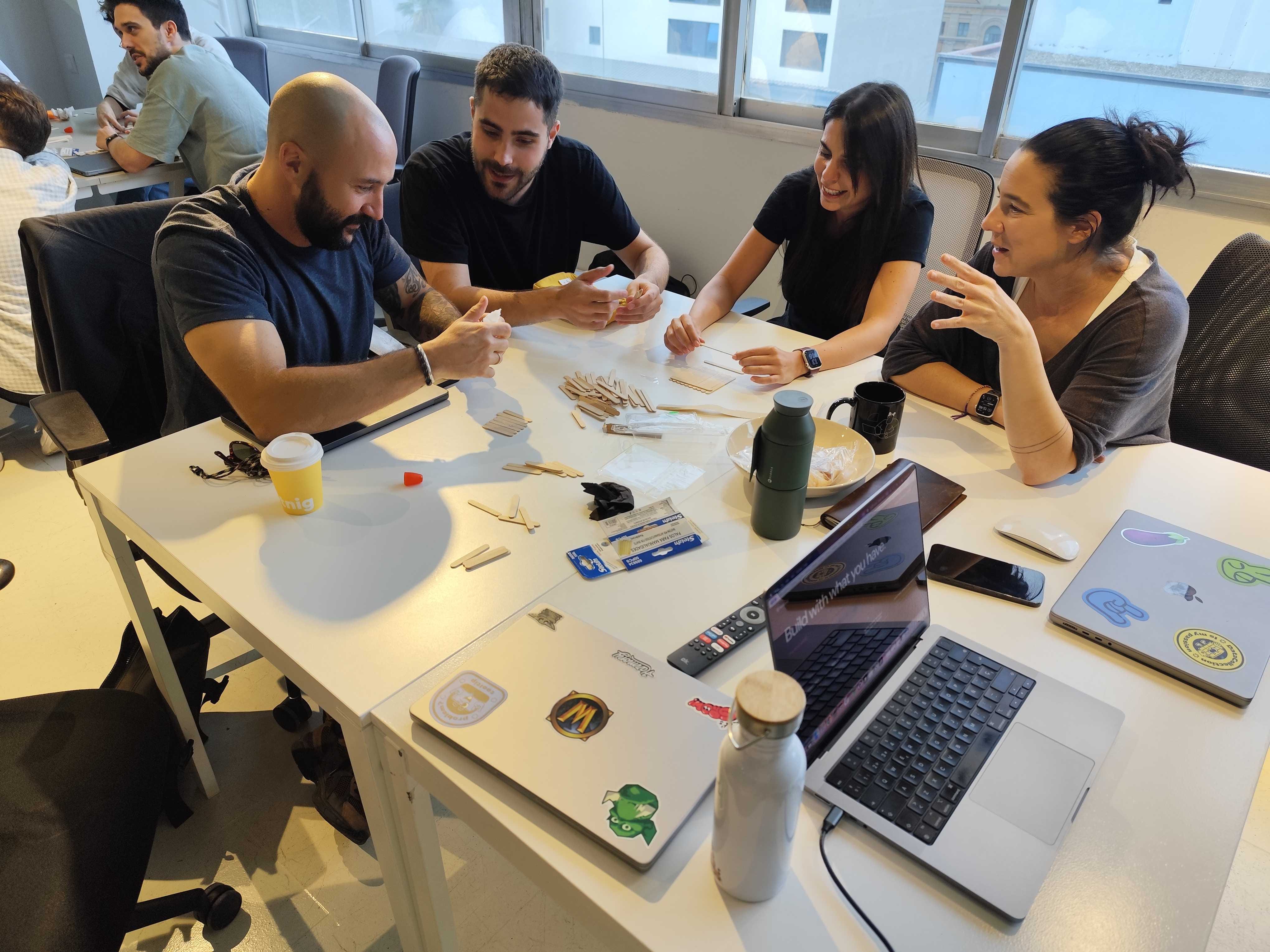
A few weeks ago, at Factorial, we ran a Product Design workshop that explored what it really means to be a great product designer today.
And it reminded me how outdated most of our mental models still are.
The old definition of “great design”
Fifteen years ago, great design just meant beautiful visuals. The designer was the creative genius who made things look good.
Then came the UX revolution. We stopped asking, “Does this look good?” and started asking, “Do users understand it? Can they use it easily?”
For a while, that was enough. UX became the holy grail. But the world moved again, faster than our vocabulary.
Today, great design isn’t about beauty or even usability. It’s about impact.
Impact doesn’t come from complexity. It comes from clarity.
The best designers aren’t the ones who can explain complex problems up to the last detail; they’re the ones who make them become simple.
Because solving a hard problem in a simple way is harder than it looks.
Simplicity is not a style. It’s a strategy. And that requires a completely different mindset.
Falling in love with the problem
Over the last five years of interviewing hundreds of designers, I’ve noticed a pattern:
The ones who make the biggest impact aren’t the most creative, technical, or experienced.
They’re the ones who see beauty in problems.
While others get frustrated by complexity, they lean in. They’re explorers, not decorators.
When you talk to them, they don’t sell themselves. They talk about customers. About friction points. About something they can’t stop thinking about.
They treat every “why” as a doorway.
Every “I don’t know” as an invitation.
This mindset, infinite curiosity, is the foundation of great product design.
1. Infinite curiosity
A great designer doesn’t live in Figma. They live in the world and they:
Constantly ask why and how things work.
Get more energy from discovery calls than from pixels.
Love when users derail interviews, because that’s where the truth hides.
Peek into engineering discussions not because they have to, but because they want to understand what’s possible.
This curiosity builds context, and context turns complexity into simplicity, the purest form of good design.
Try this yourself:
Next time you’re in a user interview, forget your script. Ask, “What’s frustrating you today?” Then follow that thread as far as it goes.
You’ll learn more in 20 minutes of real curiosity than in weeks of design reviews.
2. Ship fast, learn faster
A designer’s ego used to live in the final design. Now it should live in the feedback loop.
Great product designers don’t romanticize their ideas. They ship rough drafts, watch what happens, and adapt fast.
They know perfection is an illusion, and worse, a bottleneck.
Here’s what they do differently:
Prioritize user reactions over personal taste.
Release tiny experiments daily instead of perfect releases quarterly.
Treat every version as disposable, except the learnings.
Believe being roughly right today is better than being perfectly wrong tomorrow.
It’s a scientific mindset: design as a series of hypotheses, not masterpieces.
And it’s contagious. When one designer ships fast, the whole team learns faster.
3. Impact-Driven Design
Shipping isn’t the finish line, it’s the starting gun.
Great designers measure their success by impact, not output. They:
Ask how each task moves a metric, not just the project forward.
Stay involved after handoff, watching how users actually behave.
Push teams to measure outcomes, not milestones.
Celebrate user adoption and business impact, not launches.
Because launching something means nothing if doesn’t bring any value and no one uses it. Or worse, if no one cares.
This kind of ownership transforms how teams see design.
It shifts the question from “Is this ready to ship?” to “Is this solving something real?”
The New Definition of Great Design
If I had to summarize what makes a great product designer in 2025, it would be this:
A great product designer turns curiosity into clarity, clarity into action, and action into impact.
They bridge discovery and delivery.
They think like researchers, move like builders, and measure like founders.
And they remind everyone around them that design is not an important department, it’s a way of thinking through problems.
Closing Thought
The future of design doesn’t belong to those who make things look great.
It belongs to those who make things work great, for real people, in the real world.
And that starts with one question you should never stop asking:
Why?